
Combining caregiving and work: making agreements
This is how you talk to your employer about care leave, planning, privacy, and extra support.
Read article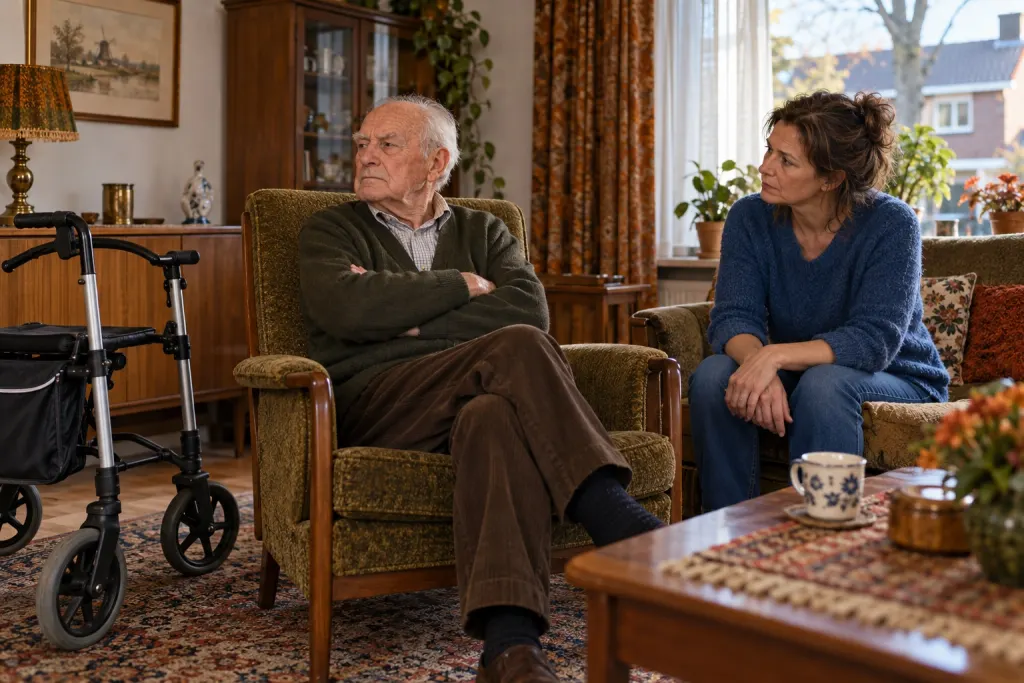
How to start small, open the conversation, and safeguard your own boundaries.
If your loved one refuses help, it can cost you a lot of energy. You want to help, but you run up against resistance. Then it helps to start small and see what can be discussed.
A loved one is allowed to refuse help. This is often due to fear of losing control. Shame can also play a role. So don’t start with big solutions right away. That often creates more resistance.
Starting small often works better. Think of a familiar face stopping by for a short visit. Or one chore being taken over. Sometimes it helps if someone else starts the conversation. That could be a family member, your general practitioner, or independent client support. At Mantelzorg Zoetermeer you can also discuss how to deal with that refusal.
"Start small: a familiar face stopping by for a short visit or taking over one chore."
Small help at home can ease the pressure. Think of cleaning help, grocery help, a handyman service, help in the garden, a meal service, or a volunteer for a small task. That way, not all tasks have to land on you right away.
Some help you arrange yourself. Other help may be available through the Wmo after an assessment. For an application or comparison of routes, you can ask for help at your municipality’s Wmo desk or independent client support.
The general practitioner can help to get the conversation moving. With your loved one’s permission, you can go along to appointments and share changes. The GP or practice nurse can also give explanations, think along about an emergency plan, and refer you.
Someone else can also start the conversation. Think of a family member, your general practitioner, or independent client support. That can take the tension away if you keep running into the same refusal. If you yourself develop complaints because of the care, discuss them with your own general practitioner.
Start at the local access desk or Mantelzorg Zoetermeer. They will help you on to the right place. You do not have to feel bad enough first. Asking for help is always allowed.
At Mantelzorg Zoetermeer you can discuss the refusal of help. You can also discuss where to find support for yourself. That can help if you do not know where to start.
If it becomes unsafe, safety comes first. In an emergency, call 112. If there is shouting, threats, someone grabbing tightly, locking someone in, or care being withheld, the limit of safe care has been reached.
If there is no immediate danger, honestly present the situation to Veilig Thuis, your general practitioner, district nurse, or caregiver support worker. Veilig Thuis can think along anonymously. In case of serious but non-urgent concerns about a resident of Zoetermeer, Meldpunt Bezorgd Zoetermeer can make an assessment. For medical assessment without immediate life-threatening danger, the general practitioner or out-of-hours GP service can be an option.
If you yourself get stuck, go to your own general practitioner. Many caregivers develop physical or psychological complaints because of the care. Don’t keep walking around with that for too long. If you have thoughts of suicide, you can call or chat day and night, free of charge and anonymously, with 113.

This is how you talk to your employer about care leave, planning, privacy, and extra support.
Read article
A family conversation helps divide tasks and prevent misunderstandings.
Read article
How to think along from a distance, make arrangements, and arrange support.
Read article
Caring for someone can raise many questions. Whether it's practical questions, doubts, sharing your worries or simply wanting to tell your story.
Sophie listens and thinks along with you – with understanding for your situation.