
Combining caregiving and work: making agreements
This is how you talk to your employer about care leave, planning, privacy, and extra support.
Read article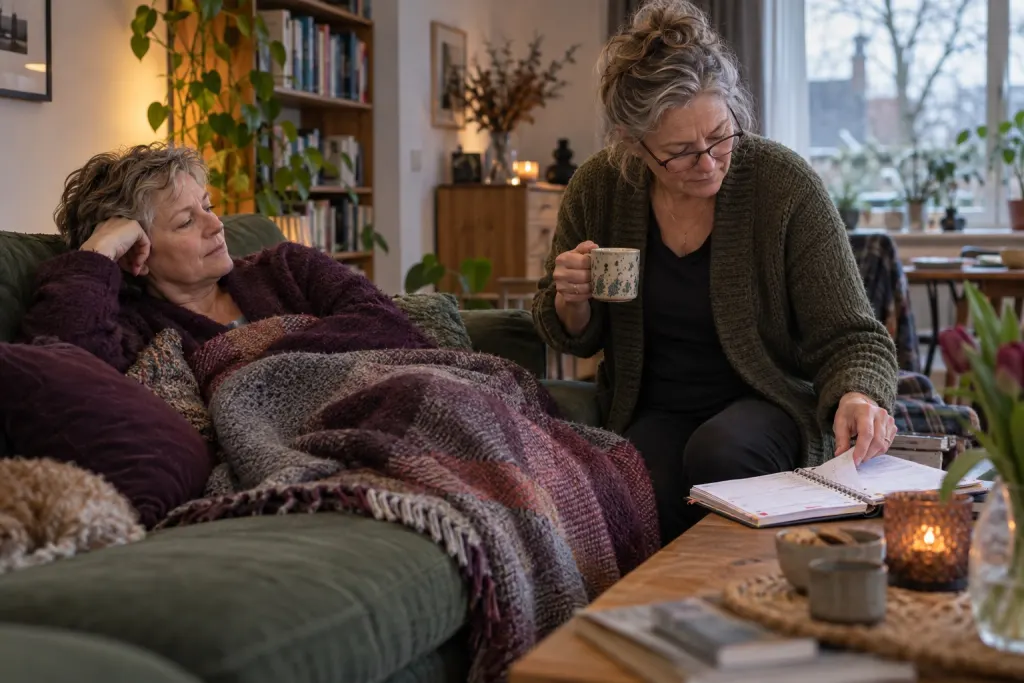
Ideas for connection, intimacy, grief, roles, and support in a changing relationship.
When a relationship changes through caregiving, a lot often shifts in the home and in the contact between you. Roles can change, and that asks a lot of you. On days like these, it helps to pause and reflect on what is changing between you and what that does to the care.
If you care for your partner, care and love often overlap. You want to be there for the other person, but your own limits quickly fade from view. That makes the relationship different, especially if you have been together for a long time.
The bond can still remain warm. Doing things together, small moments of recognition or gratitude, give the caregiving value. You are allowed to enjoy those beautiful moments, even while the fatigue remains. Talking about how you are doing can help.
Small things can mean a lot. A smile, a shared memory, or a moment of recognition can carry your day. Sometimes you feel exhausted, and yet there is still a brief closeness between you.
That does not make caregiving easier, but it does make it more bearable. Many family caregivers feel proud and connected through such moments. Every now and then, pause to consider what caregiving still gives you. If that sense of meaning fades, you can talk about it with Mantelzorg Zoetermeer or a spiritual caregiver.
Caregiving often changes the role in your relationship. You are not only a partner, but have also become a caregiver. When caring for a partner in later life, this often happens for a long time and intensively.
In doing so, boundaries quickly come under pressure. Signs of overload are persistent fatigue, poor sleep, low mood, or the feeling of being alone. Share the care with others and ask for replacement care in time, so you can catch your breath for a moment. Talking helps, including with Mantelzorg Zoetermeer.
After a death, not only does a loved one disappear. Often the daily caregiving role disappears too. That can bring sadness, relief, emptiness, guilt, or several feelings at once.
There is no fixed way or timeframe for grief. Support can come from people close to you, a volunteer, a peer group, social work, spiritual care, or professional grief counseling. If low mood persists for a long time, eating or sleeping hardly works, or you do not feel safe, contact your GP or appropriate emergency help.
After a period of caregiving, a lot can be going on at once. You may need support, rest, or a new role in the relationship with your loved one. If living at home is truly no longer possible, a nursing home may be needed. Then the care team takes over the daily care, and you can again be mainly a partner, child, or friend.
For support with grief and loss, you can also look for options in Zoetermeer. If you have questions about caring for your partner, you can also contact Mantelzorg Zoetermeer for advice and support.

This is how you talk to your employer about care leave, planning, privacy, and extra support.
Read article
How to start small, open the conversation, and safeguard your own boundaries.
Read article
A family conversation helps divide tasks and prevent misunderstandings.
Read article
Caring for someone can raise many questions. Whether it's practical questions, doubts, sharing your worries or simply wanting to tell your story.
Sophie listens and thinks along with you – with understanding for your situation.