
Respite care temporarily handing over the care
A set of questions about types, application, costs, and help in Zoetermeer.
Read article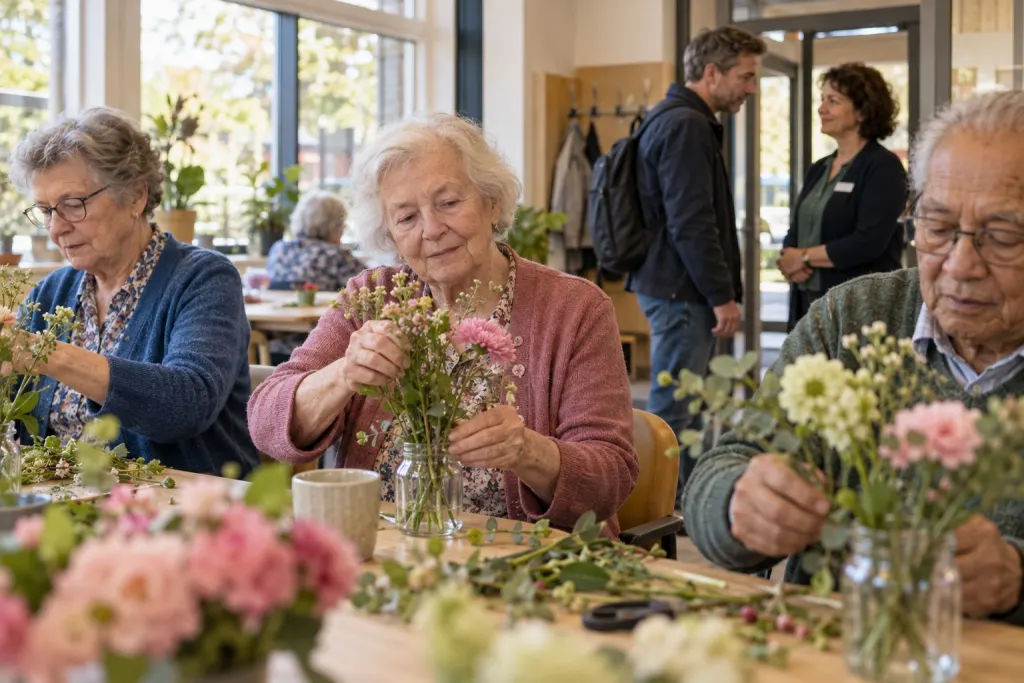
This is how you arrange day activity care, day care, and daytime activities in Zoetermeer.
Day activity care or day care can help you when everything at home becomes too much. It gives structure to the day and sometimes takes some of the pressure off caregiving for a while. For Zoetermeer, the route depends on the help you need.
Day activity care is a meaningful way to spend the day. That can be adapted work, activities, or day care. Day care therefore falls under the broader term day activity care.
With day care, your loved one goes for one or more half-days to a place nearby. That can be a community center, day center, or care farm. There are activities and supervision there. Sometimes there is also personal care or nursing assistance. Day treatment is something else. That focuses more on treatment or rehabilitation.
There are forms for different situations. In Zoetermeer there is an accessible daytime facility for people with early memory problems, early dementia, physical complaints, or few social contacts. The goal is to stay active and social, and maintain skills.
For people with dementia, there are meeting centers. There they receive activities and supervision. Informal caregivers can find information, advice, and contact there. In the case of a disability or psychological vulnerability, individual support can help with organizing the day, social contacts, administration, or everyday matters.
That depends on the form. Some activities you can arrange yourself. Those are freely accessible. For day care at a care institution, you can submit a Wmo notification to your municipality.
For the daytime facility without an indication, no diagnosis or indication is needed. Registration goes through the senior advisor in the neighborhood. For meeting centers for dementia, participation can be paid for through the Wmo or Wlz. For individual support for someone with a disability or psychological vulnerability, no municipal indication is needed.
For the daytime facility without an indication, you register through the senior advisor in the neighborhood. After that, there is an initial conversation with an activity coach. For meeting centers for dementia, you can register through the case manager, the general practitioner, or the geriatrician. You can also contact them yourself. The coordinator helps with the application.
For day activity care with an indication, you pay a personal contribution through the CAK. For some forms of support, a personal contribution also applies, and the amount is listed by the CAK. Participation in meeting centers is usually paid for through the Wmo or the Wlz, with a personal contribution.
For the daytime facility without an indication, you can find the participation days, meals, and contributions in the current offer. For day care or day care support, you can also ask about the route, personal contribution, and transport options.
Choose the form that matches the help needed. Think of light respite care, day care, or a meeting center for dementia. At inZet and through independent client support, they will think along with you for free about what fits.
If you want someone to stay at home with your loved one, that involves a different route. For short-term stay and respite care, the steps are also different. The local access desk can look with you for a place close to home.
A set of questions about types, application, costs, and help in Zoetermeer.
Read article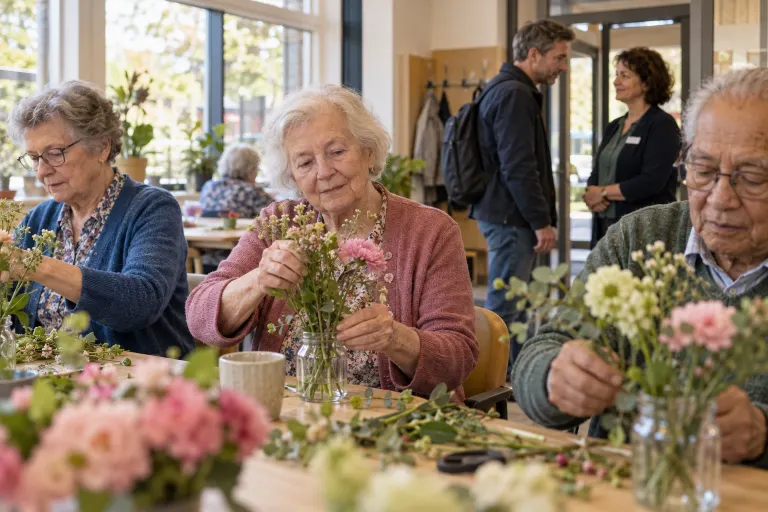
An overview of options, reimbursements, and the route in Zoetermeer.
Read article
A plan for warning signs, a brief check, and what you do then.
Read article
Caring for someone can raise many questions. Whether it's practical questions, doubts, sharing your worries or simply wanting to tell your story.
Sophie listens and thinks along with you – with understanding for your situation.