
When am I a caregiver?
Explains what caregiving is, what usual help is, and when you may ask for help.
Read article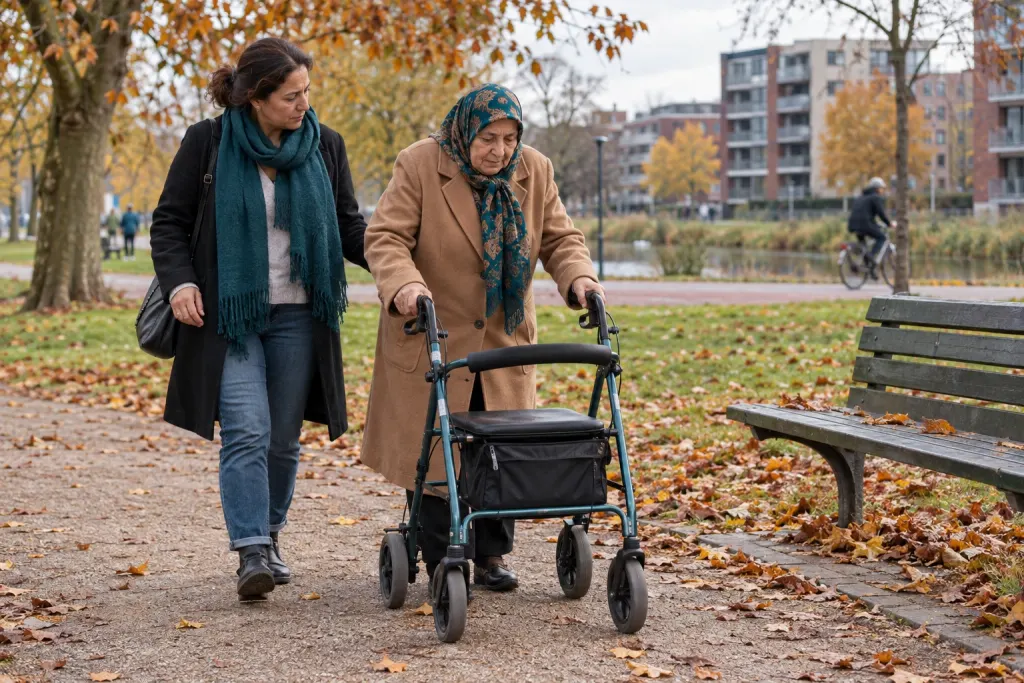
About daily routines, sharing care, seeking help, and support for a partner or informal caregiver.
Caring for someone with Parkinson’s disease often requires going with the flow of good days and bad days. That can ask a lot of you, especially as the care gradually becomes more demanding. You then keep trying to figure out what is and is not possible today.
With Parkinson’s, tasks often gradually shift along. You think along with appointments and medication, and later you help more and more around the house. That can cause unrest when days differ.
Keep regular things as simple as possible. Put medications and appointments together in one overview. Also agree who does which task. That helps you have to remember less on busy days.
If things at home become more demanding, you do not have to do everything yourself. Bring in professional help or a volunteer in time. At the national Parkinson’s association, you can go as a partner or informal caregiver for information, peer contact, and meetings. There are also programs that help you stay balanced and combine caregiving with work.
Caring can become heavy, especially if you do it for a long time. Pay attention to tiredness, poor sleep, feeling down, or the feeling that you are in this alone. Those are signs that it is becoming too much.
Share the care with others. Ask for replacement care in time, so you can catch your breath. At Mantelzorg Zoetermeer you can get advice and support. If you notice that you are becoming overburdened, discuss that with your GP.
Do not wait until it really becomes too much.
If the care continues to increase, look more broadly at help. Ask the treatment team to also discuss with partners, children, and other important loved ones what they are experiencing and what they need. Clearly set out which tasks you carry and where your limit is.
Peer contact or guidance with knowledge of Huntington can help with questions about relationships, parenting, grief, and planning for the future. For support in your own role, you can also turn to Mantelzorg Zoetermeer. If you care for an older loved one without one clear diagnosis, Regelhulp can help by care topic to keep an overview of what is available and how to apply for it.
Choose one fixed starting point. That can be an overview of medications and appointments, or sharing the care with someone else. By fixing one thing, the rest often becomes clearer too.
If the care grows further, look again at what you can still carry. Then bring in help earlier, such as professional help or a volunteer. At Mantelzorg Zoetermeer you can get advice and support, and at the national Parkinson’s association you can find information, peer contact, and meetings.

Explains what caregiving is, what usual help is, and when you may ask for help.
Read article
An initial overview of the case manager, day activities, support, and what changes.
Read article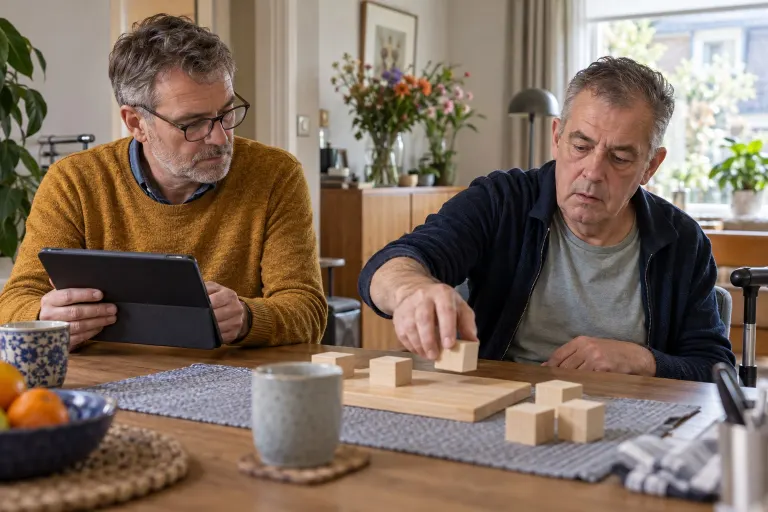
What to arrange at home after a stroke, with attention to recovery, safety, and support.
Read article
Caring for someone can raise many questions. Whether it's practical questions, doubts, sharing your worries or simply wanting to tell your story.
Sophie listens and thinks along with you – with understanding for your situation.