
When am I a caregiver?
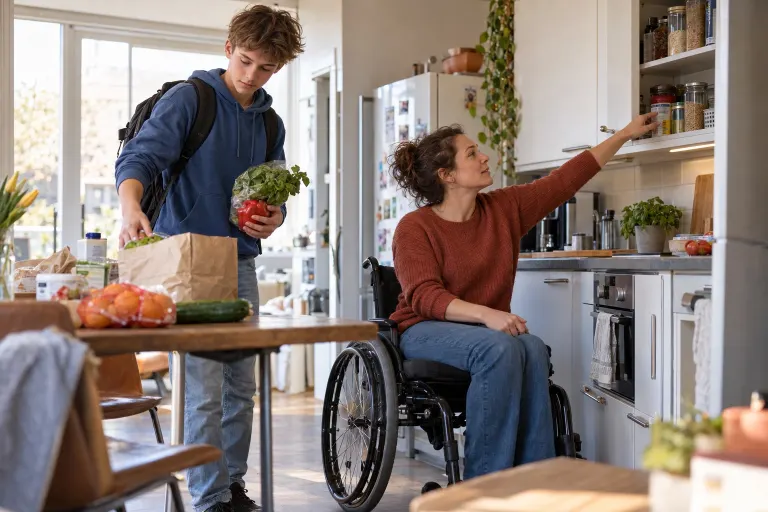
Explains what caregiving is, what usual help is, and when you may ask for help.
Read article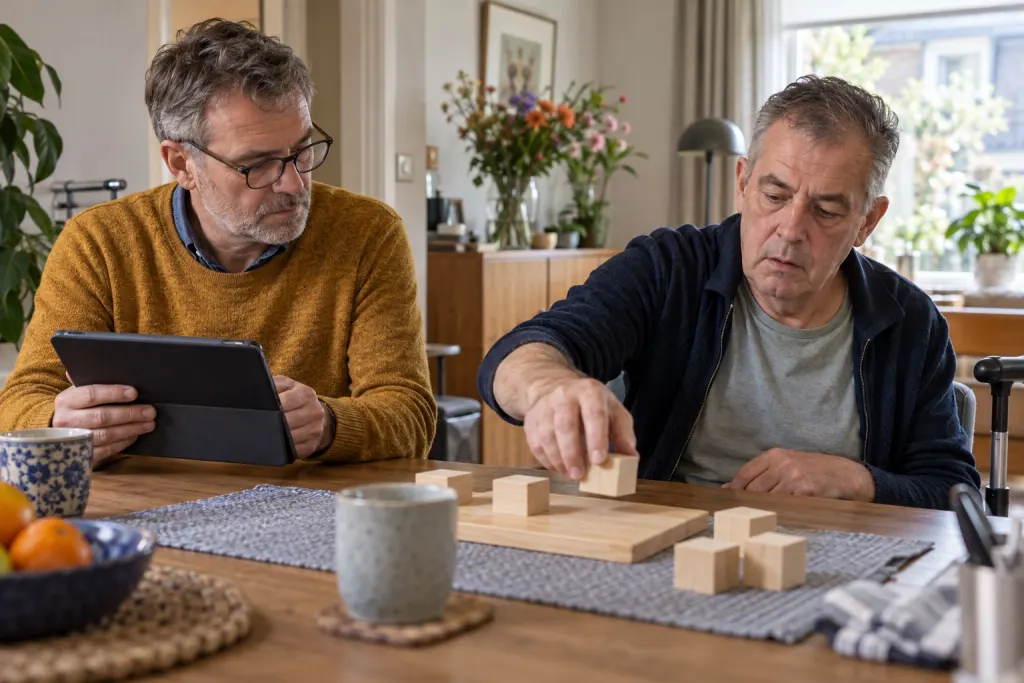
What to arrange at home after a stroke, with attention to recovery, safety, and support.
After a stroke, a lot often changes at home in a short time. Caring for your loved one can suddenly require a lot of arranging, while you are still figuring out what is important now. In the first few days, it helps to calmly look at what is needed immediately and what can wait a little longer.
After a stroke, going home sometimes is not possible right away. Then a short stay in a care facility can help: short-term care. Someone lives there temporarily and receives nursing care, personal care, and treatment to regain strength.
For recovery after, for example, a stroke, this is called geriatric rehabilitation. Then a team works toward one goal: returning home as well as possible. The general practitioner or medical specialist assesses whether this is necessary and gives an indication. With that indication, you receive reimbursement from the health insurance.
As a loved one, this also gives you some breathing room. Ask the hospital about the possibilities.
At home, it often comes down to small things that together demand a lot. Think of walking, dressing, eating, breathing, or transferring. Do not wait until an action becomes unsafe.
Ask for advice in time about aids, the home, and professional help. An occupational therapist can think along about how daily activities can become less strenuous. Do not lift or move your loved one in a way that harms your body.
You do not have to take over nursing or technical care by default. Ask for clear instruction, practice, and backup support. In Zoetermeer, current providers of district nursing, an occupational therapist, and independent client support can help.
After a stroke, a lot often changes all at once. You take over tasks and may face changed behavior or a different personality. Many loved ones grieve for who their partner or family member was, while that person is still there.
That deserves to be acknowledged. As a loved one, you are at greater risk of overburdening and loneliness, precisely because care has no fixed hours. Share the care with others and take good care of yourself too.
You can also seek support from a national patient association for brain injury. There you will find information, contact with peers, and practical tips specifically for loved ones. If you are unsure about suitable guidance or help, discuss it with your GP.
Safe care requires arranging help in time. With increasing loss of strength or a muscular disease, more and more help may be needed. Then ask for advice about aids, the home, and professional help.
If caring turns into shouting, threats, grabbing someone hard, locking someone in, or withholding care, the limit of safe care has been reached. First bring yourself and your loved one to safety. In an acute emergency, call 112. If there is no immediate danger, honestly present the situation to Veilig Thuis, your GP, district nurse, or informal care support worker.
The GP is a good point of contact if you are unsure about help or guidance. Even if the care is becoming too much for you, that is a moment to discuss it. In case of overburdening, you can mention this as well.
If there are concerns about safety or if the situation threatens to escalate further, you must act more quickly. In an acute emergency, call 112. Without immediate danger, you can involve the GP and also ask Veilig Thuis to think along.
There is more support for you than many people think. After a stroke, or with ABI in general, your life often changes along with it. You can then seek information, peer contact, and practical tips through a national patient association for brain injury.
For support in your own role, you can also turn to Mantelzorg Zoetermeer. If you have questions about boundaries, balance, and what you need, that can help. If you are unsure about suitable guidance or help, discuss it with your GP.
In home care, your limits matter too. You do not have to silently take over tasks if it becomes too much.
Explains what caregiving is, what usual help is, and when you may ask for help.
Read article
An initial overview of the case manager, day activities, support, and what changes.
Read article
Practical and emotional support for caregivers around cancer and the final phase of life.
Read article
Caring for someone can raise many questions. Whether it's practical questions, doubts, sharing your worries or simply wanting to tell your story.
Sophie listens and thinks along with you – with understanding for your situation.