
Caring for Someone with Dementia: Help and Changes
An initial overview of the case manager, day activities, support, and what changes.
Read article
Explains what caregiving is, what usual help is, and when you may ask for help.
You are a caregiver sooner than you might think, even if it feels obvious to you. As soon as you help someone around you, that often grows into caregiving. You then provide care not as a professional, but because you are involved with someone who needs help.
Caregiving is care for someone in your environment. That person is ill, is getting older, or has a disability. It is help based on a personal bond. So not because it is your job or because you work in an organization.
Caregiving often lasts a long time and takes a lot of time. You may help with shopping, housework, personal care, or appointments. Taking care of arrangements and keeping someone company are part of it too. Sometimes that care grows gradually. First you do small things. Later it becomes more.
You are a caregiver if you regularly care for a family member, friend, or neighbor. That also applies if it happens naturally. So you do not have to call yourself that first.
Sometimes that involves more than washing or giving medication. Going along to appointments, handling administration, calling often, or worrying a lot can also be caregiving.
Usual help is the everyday care between household members. You live together and help each other at home. Think of cooking, cleaning, or arranging something for your partner, parent, or child. That is part of it and does not count as caregiving.
Caregiving begins when that help clearly becomes more than normal. The care is then heavier, lasts longer, or asks more than you would expect from household members. You do not have to live together to be a caregiver. The difference counts when you request support.
Ordinary help is what household members usually do for each other. Caregiving goes further. It is heavier, lasts longer, or requires more attention than ordinary help.
In caregiving, it may involve care that keeps returning. It may also mean that you spend a lot of time arranging things, supervising, or providing personal care. So the difference is not only in what you do, but also in how often and how long it continues.
Write down what help you provide and how much time and attention it takes. That helps to clearly see what is needed.
Write down what you help with. Also note how often that is needed. Add what happens when you are not there. Think of dressing, transport, appointments, supervision, administration, or support with fear and uncertainty.
With such an overview, you can more easily talk to your general practitioner, the care provider, or independent client support.

An initial overview of the case manager, day activities, support, and what changes.
Read article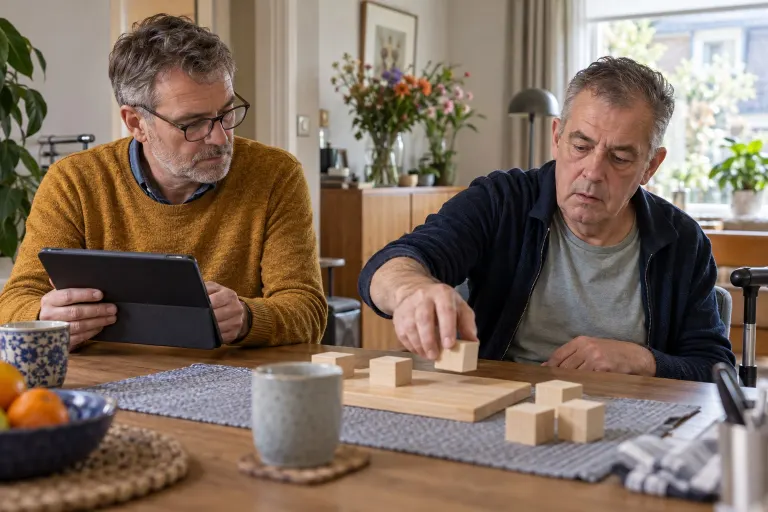
What to arrange at home after a stroke, with attention to recovery, safety, and support.
Read article
Practical and emotional support for caregivers around cancer and the final phase of life.
Read article
Caring for someone can raise many questions. Whether it's practical questions, doubts, sharing your worries or simply wanting to tell your story.
Sophie listens and thinks along with you – with understanding for your situation.