
Personal care at home: helping safely as an informal caregiver
What you need to arrange for washing, dressing, and toilet assistance at home.
Read article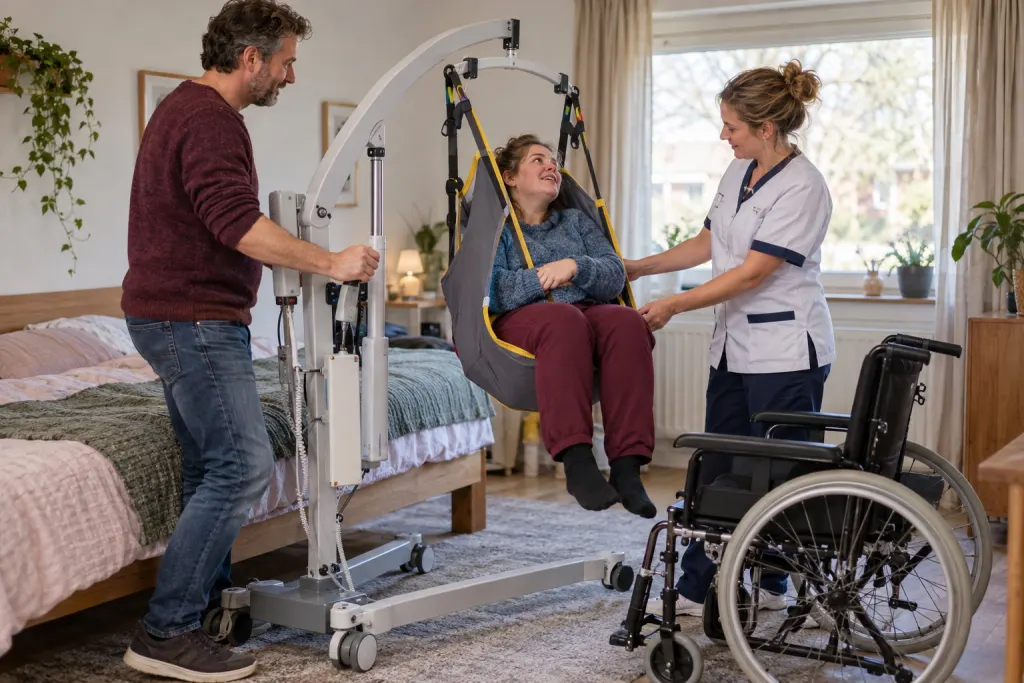
Practical basics, aids, training, and when to ask for help in time.
If you lift another person, you quickly notice how hard that can be on your back. Especially if you often bend, twist, or help someone out of bed, the strain can build up quickly. That is why it is wise to keep your movements small and stand properly before you begin.
Lifting, turning, and moving someone can place heavy strain on your back, shoulders, and joints. A safe method depends on what your loved one can still do on their own, the space in the home, and the aids available.
That is why it is a good idea to ask a district nurse, physiotherapist, or occupational therapist to look along with you. They can also demonstrate the procedure. A safer approach often starts with looking at what someone can still do independently.
A slide sheet, turning disc, electric adjustable bed, or hoist can sometimes help. Proper use does require instruction, though. Without explanation, an aid can actually become awkward or unsafe.
If you only need an aid for a short time, for example after surgery, you can often borrow or rent one through your health insurer or a home-care equipment store. If it is for long-term use, you request it through the Wmo. In that case, submit a Wmo report to your municipality.
A district nurse, physiotherapist, or occupational therapist can observe. An occupational therapist can also look for practical assessment and training in the home situation. In the case of a muscle disease or increasing loss of strength, an occupational therapist can help make daily activities less demanding.
Do not wait until a task becomes unsafe. Ask for advice in time about aids, the home, and professional help. You do not have to take over nursing or technical care by default.
Ask for clear instructions, practice, and backup. Then you know better how to perform a task and what to do if things go differently. A solution only really works if it fits the situation at home.
Through an occupational therapist, you can look for practical assessment and training in the home situation. They will watch how you lift, turn, or move someone without putting extra strain on your body.
Stop when a movement causes pain or feels unsafe. Do not lift or move your loved one in a way that harms your body. This applies even more if the strain increases or if you already notice that it is too much.
If you notice that you are shouting, threatening, holding someone tightly, locking them in, or neglecting care, the limit of safe care has been reached. First bring yourself and your loved one to safety. In an emergency, call 112.
Ask for substitute care or temporary takeover, so the pressure is reduced. Then honestly present the situation to Veilig Thuis, your GP, district nurse, or informal-care support worker. Veilig Thuis can think along anonymously, even if you are afraid of being judged.
For extra protection at home, personal alarm systems can help. With a personal alarm system, your loved one can contact an emergency response center in a crisis. Reimbursement may be provided through health insurance, the municipality, or the Wlz, depending on the reason and situation. Ask the provider and funder about the conditions.
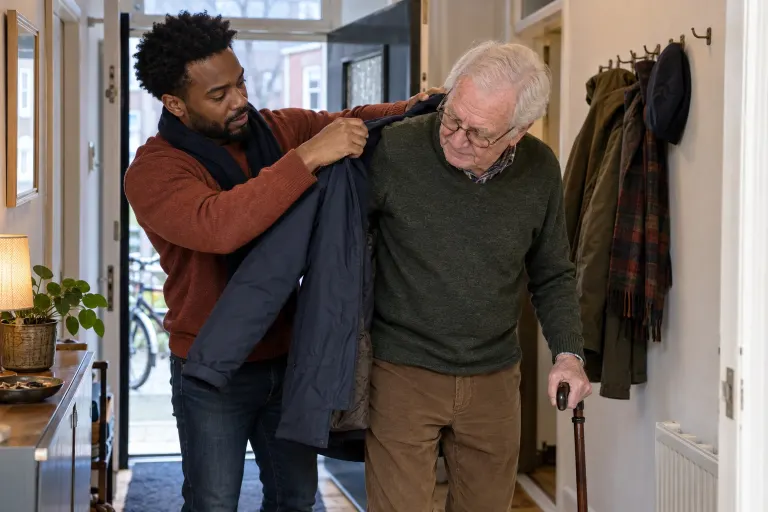
What you need to arrange for washing, dressing, and toilet assistance at home.
Read article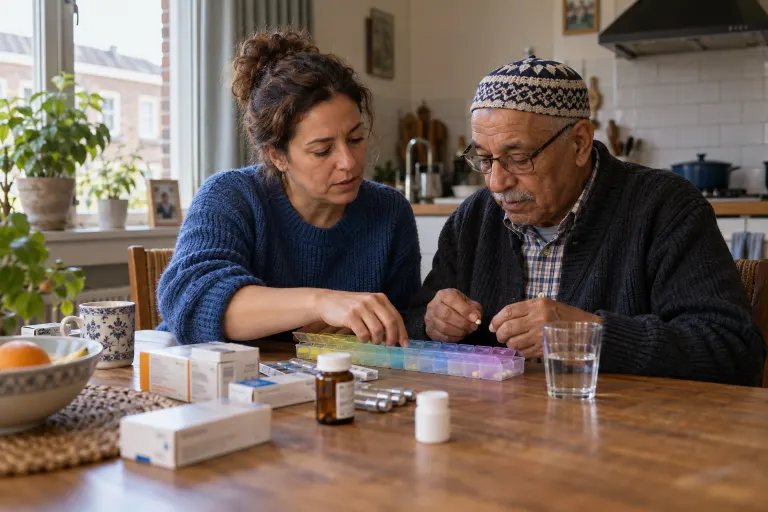
A plan for lists, pharmacy, pill packs, reminders, side effects, and mistakes.
Read article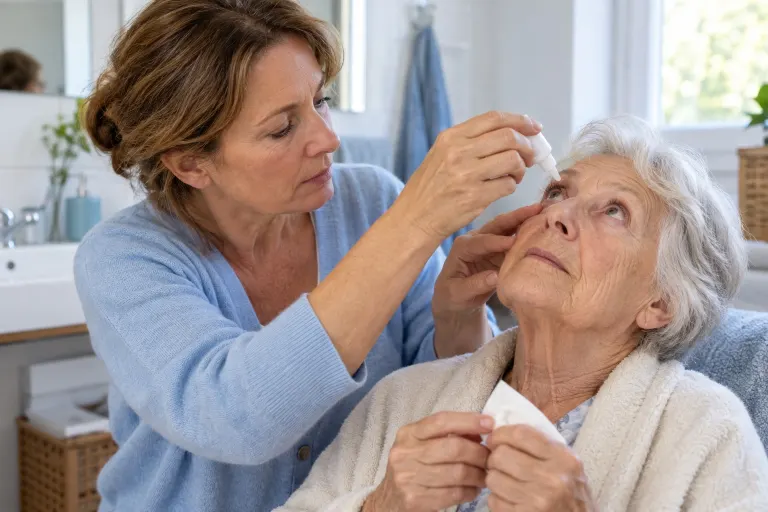
How to safely administer eye drops and when to ask for instructions or help.
Read article
Caring for someone can raise many questions. Whether it's practical questions, doubts, sharing your worries or simply wanting to tell your story.
Sophie listens and thinks along with you – with understanding for your situation.