
Personal care at home: helping safely as an informal caregiver
What you need to arrange for washing, dressing, and toilet assistance at home.
Read article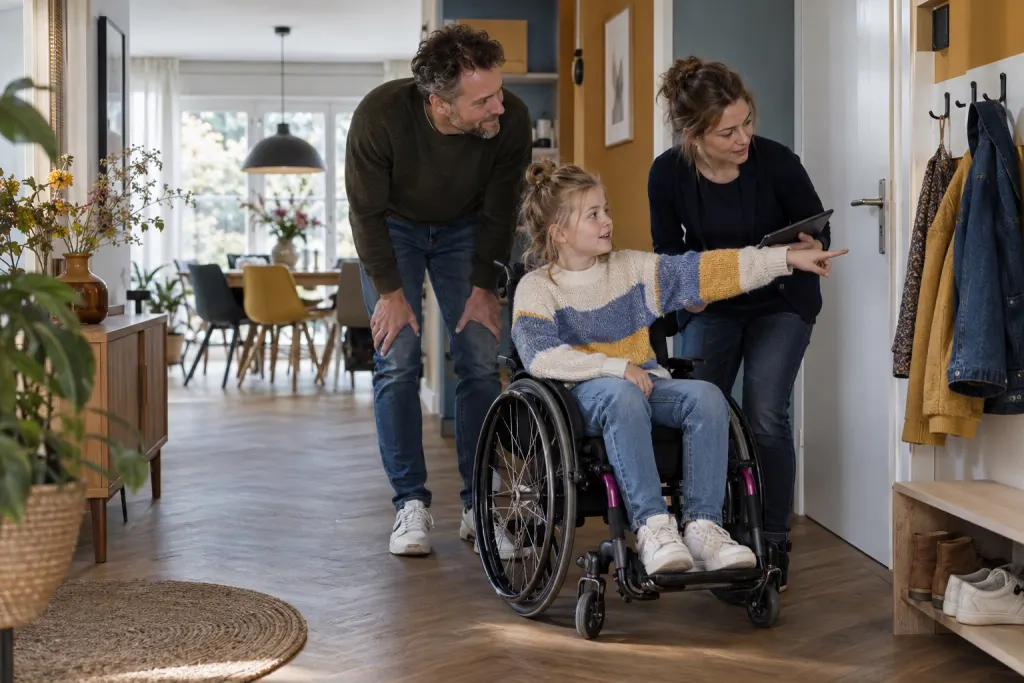
A plan for home fall risk with tips by room and help in Zoetermeer.
You can reduce the risk of falling at home by looking carefully at each room to see what is in the way. Think of loose cords, slippery floors, and items you often reach for. Small adjustments often already help a lot with fall prevention for older adults at home.
In the bathroom, hallway, and on the stairs, it helps to keep the route as clear as possible. Think of a shower chair, a stair lift, or removing thresholds. That can be helpful if walking or moving around becomes more difficult.
In Zoetermeer, you can request a home adaptation through the Wmo. Make a Wmo report to your municipality. Together with you, they will then look at what is needed, often with a home visit. After that, you will receive a decision. You pay a personal contribution through the CAK.
When lifting, turning, and moving, help from someone else can make a big difference. A district nurse, physical therapist, or occupational therapist can look along with you. They can also demonstrate an action. Through an occupational therapist, you can look for practical assessment and training in your own situation.
Sometimes aids such as a sliding sheet, swivel disc, height-adjustable bed, or hoist help. Proper use requires instruction. Stop when a movement causes pain or feels unsafe. A safe solution depends on what your loved one can do independently, the space in the home, and the available aids.
If walking, dressing, eating, breathing, or moving around becomes increasingly difficult, it is important to ask for advice in time. Do not wait until an action becomes unsafe. Then ask about aids, the home, and professional help. Do not lift or move your loved one in a way that harms your body.
If living at home is no longer feasible, there are other forms of housing. A family caregiver home can also sometimes be an option if you want to live closer together. The local access point or independent client support can help you list the possibilities. For current providers of district nursing in Zoetermeer, an occupational therapist, and independent client support, you can also contact the mentioned local help.
If a loved one is getting older, problems can pile up, such as reduced walking ability or forgetfulness. Then it helps to share care and also make room for yourself. Help may also be available with household tasks, care at home, adapted transport, activities to combat loneliness, and respite care.
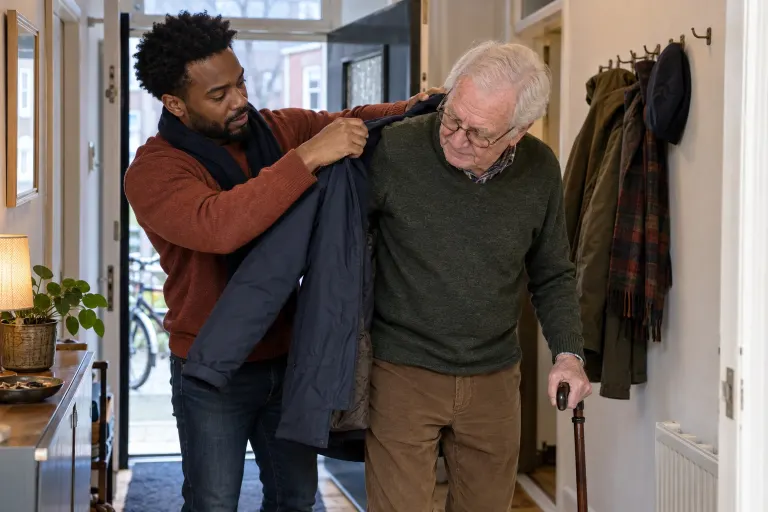
What you need to arrange for washing, dressing, and toilet assistance at home.
Read article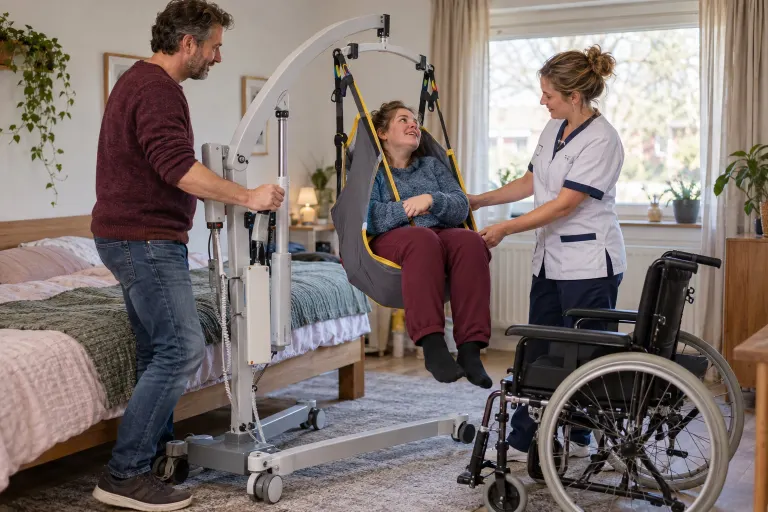
Practical basics, aids, training, and when to ask for help in time.
Read article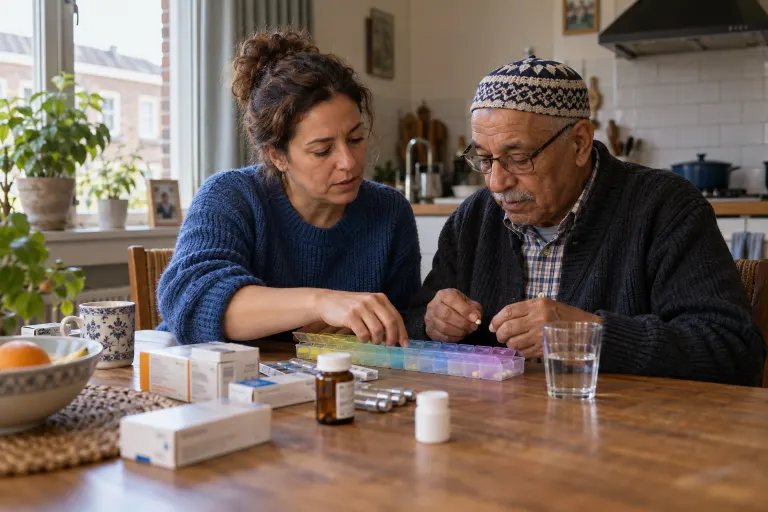
A plan for lists, pharmacy, pill packs, reminders, side effects, and mistakes.
Read article
Caring for someone can raise many questions. Whether it's practical questions, doubts, sharing your worries or simply wanting to tell your story.
Sophie listens and thinks along with you – with understanding for your situation.